WWE
John Cena Hustle Loyalty Respect: Why the Code Still Works
John Cena has catchphrases that are easier to imitate.
John Cena Hustle Loyalty Respect: Why the Code Still Works
You can wave a hand across your face for You Can’t See Me. You can point to a championship for The Champ Is Here. You can put Never Give Up on a wall and understand the message immediately.
Hustle, Loyalty, Respect asks more from you.
It is not one instruction. It is three standards that can pull against each other: work hard, remember who and what deserves your commitment, and conduct yourself in a way that recognizes people beyond your own ambition.
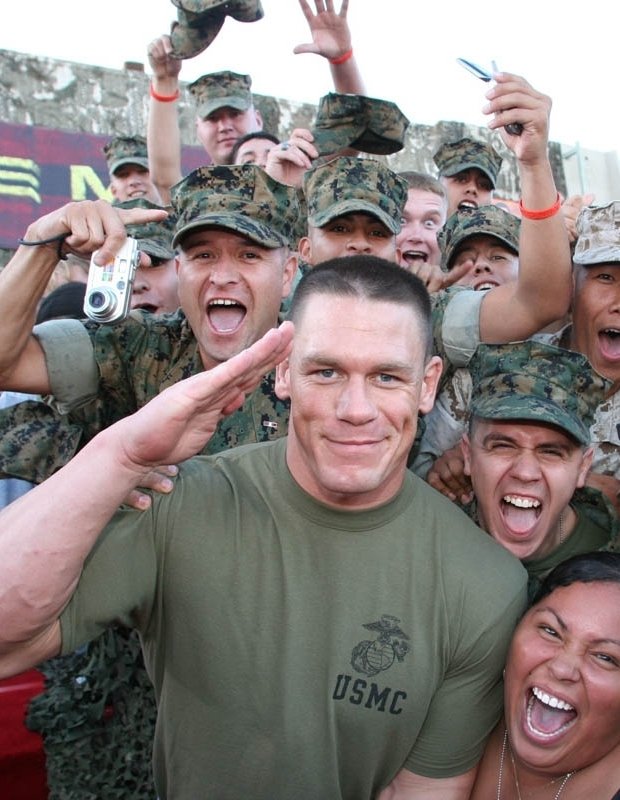
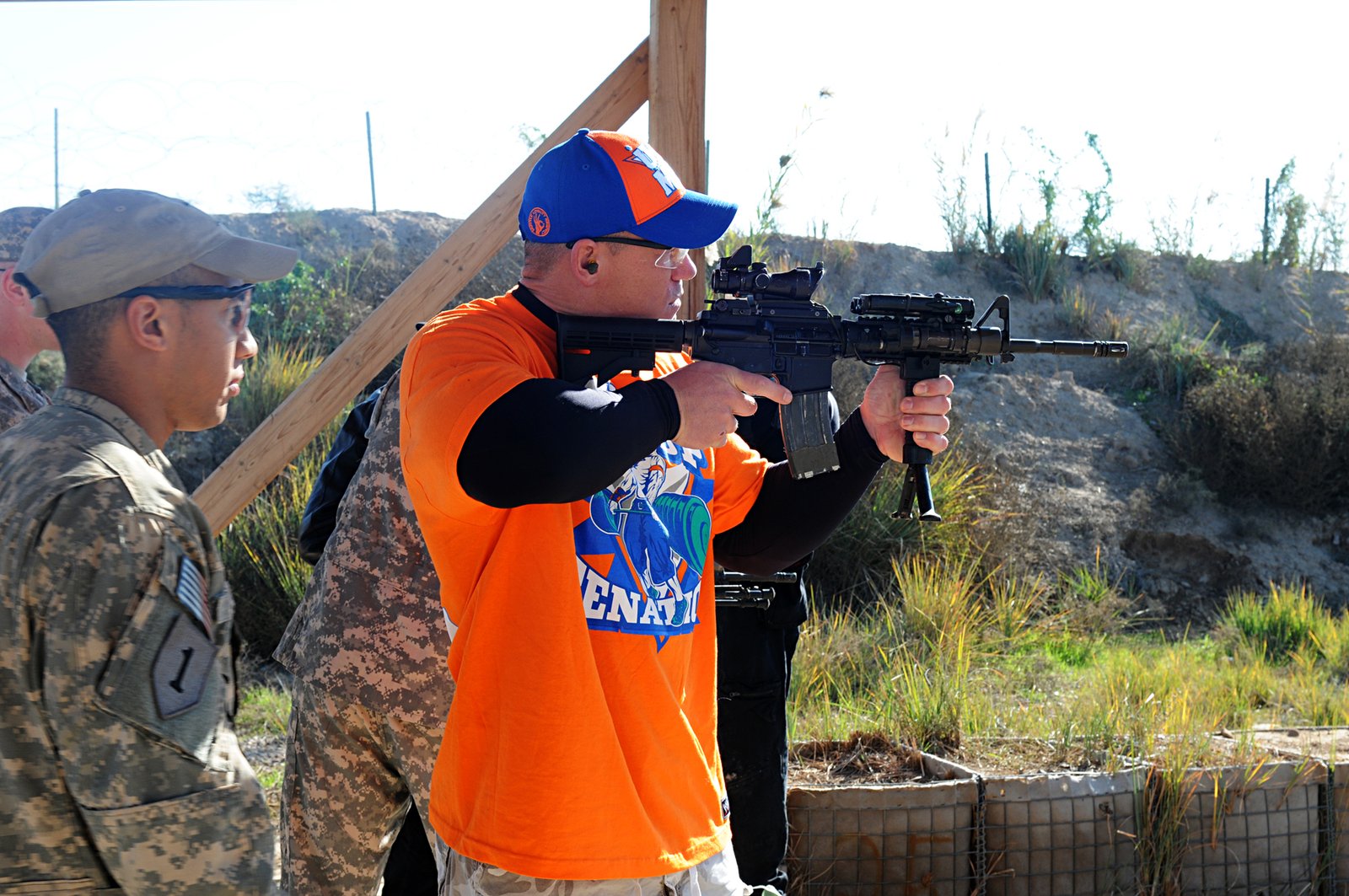
Cena did not describe the phrase as three words chosen because they looked good on merchandise. In a WWE interview, he connected their origin to ideas he admired in the U.S. Armed Forces. As his character evolved beyond the rapper persona, Cena said he drew from discipline, honor, code and country and developed his own version: Hustle, Loyalty, Respect.
That origin makes the phrase more useful when you stop treating it like a slogan.
It becomes a code.
Here are seven reasons that code still works.
1. Hustle, Loyalty, Respect Started With a Code, Not a Catchphrase
By the late 2000s, Hustle, Loyalty, Respect was everywhere in Cena’s presentation.
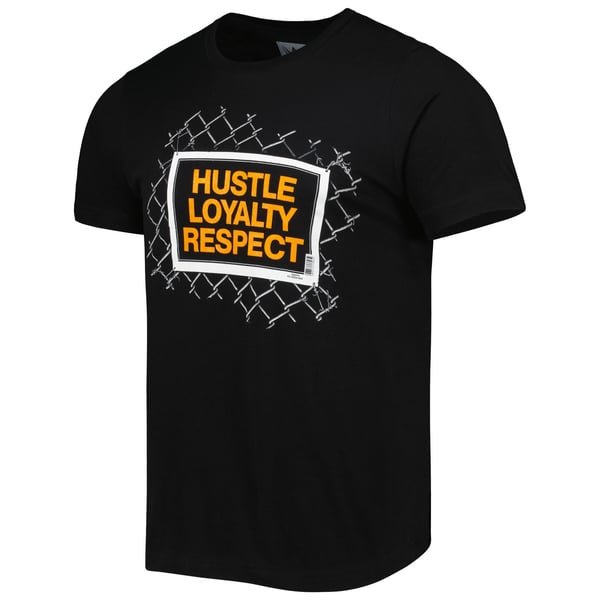
It appeared on shirts.
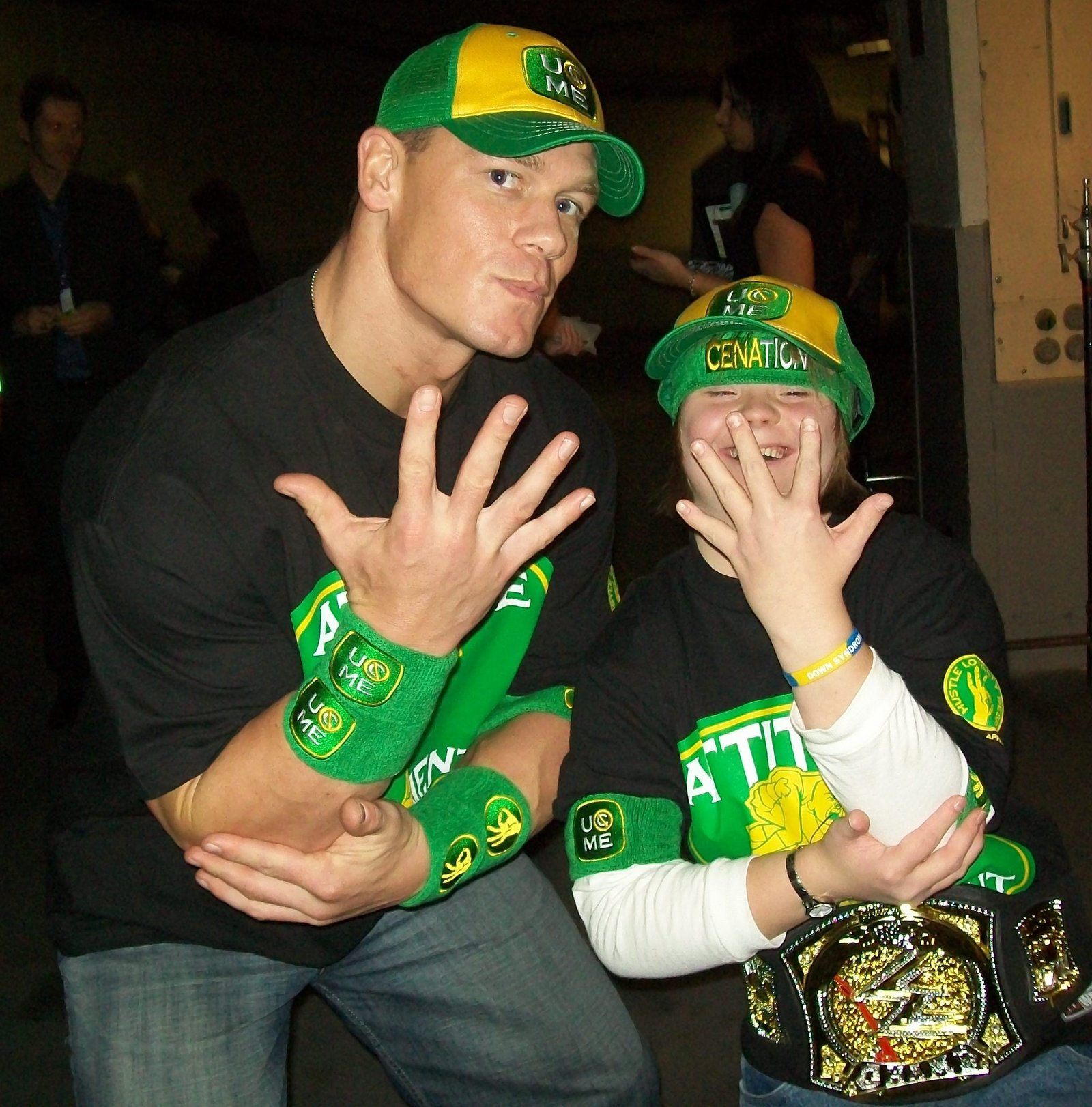
Fans used the three-finger Cenation hand signal to represent the three values.
WWE itself increasingly described the words as Cena’s ethos, not simply merchandise copy.
But the origin is more specific.
Cena told WWE that as his character evolved, he took inspiration from the discipline and code he associated with the Armed Forces. He specifically connected honor, code and country with the development of hustle, loyalty and respect.
That distinction matters.
A motivational phrase tells you how to feel.
A code is supposed to help you decide what to do.
You do not need to be motivated every morning to ask:
Am I doing the work?
Am I staying true to the people and commitments that deserve it?
Am I treating this work, and the people around it, with respect?
Those questions still function on days when enthusiasm disappears.
That is why three ordinary words can be more durable than another speech about believing in yourself.
A useful standard should still tell you something when you do not feel inspired.
2. Hustle Means Doing the Work Before the Result Protects Your Confidence
“Hustle” can easily become one of those words printed on office walls while everybody quietly rolls their eyes.
Cena’s career gives it a more concrete shape.
In September 2007, Cena suffered a torn pectoral muscle and was expected to be out for months. He returned unexpectedly at the 2008 Royal Rumble and won the match.
Later that same year, he required surgery for a herniated disk in his neck. WWE colleagues discussing the surgery repeatedly pointed to his work ethic, focus and tendency to keep moving. Big Show described Cena as constantly going; Jim Ross highlighted his work ethic and toughness; Triple H pointed to the mental toughness and passion behind his physical strength.
You do not need to copy the recovery timetable of a professional wrestler.
That is not the useful part.
The useful part is that hustle becomes visible before you know whether it will pay off.
Anyone can work hard after success begins rewarding the effort.
The test is usually earlier.
You study before you know whether you will pass.
You train before there is a transformation photograph.
You build the business before customers care.
You develop the skill before anyone calls you talented.
You keep improving the application before somebody finally says yes.
That is a less glamorous definition of hustle:
Do the part of the work that cannot yet borrow confidence from the result.
And there is an important limit.
Hustle does not mean ignoring injury, sleep, family or every signal that your method is failing.
Working harder at the wrong thing is still the wrong thing.
Cena’s example is valuable because effort mattered. It should not be turned into an argument that recovery, judgment or changing course are signs of weakness.
Hustle is commitment to the work—not worship of exhaustion.
3. Loyalty Means Remembering Who Stood With You
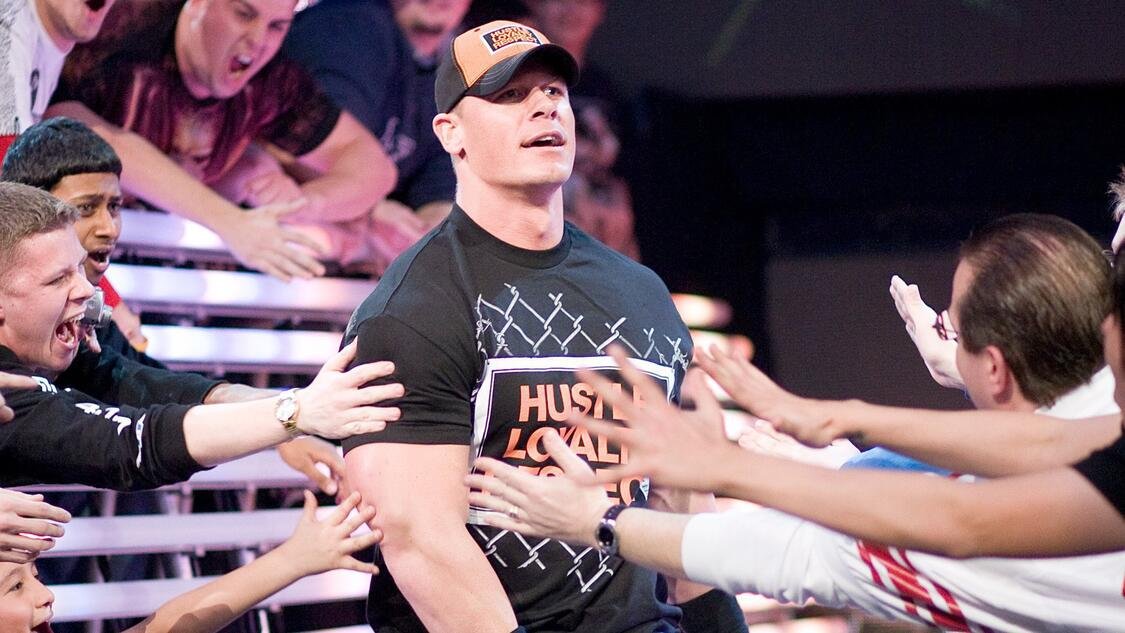
Cena gave “loyalty” an unusually clear visual expression through his entrance salute.
He told WWE that the salute was partly “a salute of loyalty” to the fans who had stood by him over the years.
He also described it as a sign of respect toward members of the Armed Forces.
That helps separate loyalty from popularity.
Cena did not have universal approval.
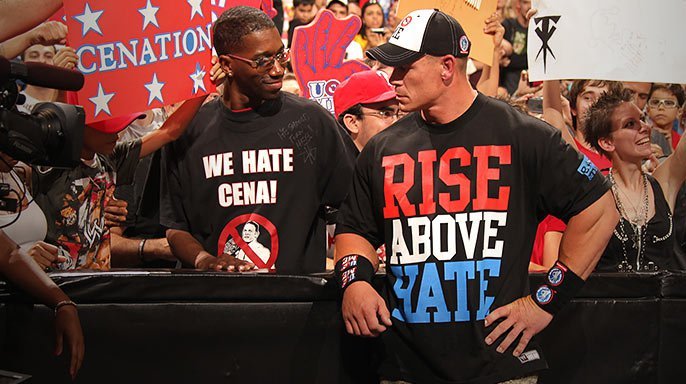
For years, WWE arenas could split into competing chants:
“Let’s Go Cena!”
and
“Cena Sucks!”
Yet he could still distinguish between the existence of criticism and the people who had consistently supported him.
You can use the same distinction.
When circumstances change, ask who actually earned your loyalty.
The friend who appeared when there was nothing to gain.
The customer who trusted you early.
The teammate who did the unglamorous work.
The family member who kept showing up.
The principle you chose before following it became inconvenient.
But loyalty needs a boundary.
It does not mean remaining loyal to every job, relationship, company, method or group regardless of what happens.
Blind loyalty can protect bad behavior as easily as good relationships.
A healthier reading is:
Do not discard people or principles simply because a more convenient option appeared.
Loyalty should be earned.
And once it is earned, convenience should not erase it too easily.
4. Respect Is Not the Same Thing as Being Liked
This may be the most useful distinction in the entire phrase.
Cena spent years as one of WWE’s most polarizing performers.
WWE itself has described the dueling “Let’s Go Cena” and “Cena Sucks” reactions that followed him while he continued presenting Hustle, Loyalty, Respect and later Rise Above Hate.
If respect required everybody to like you, Cena’s code would have collapsed.
It did not.
That suggests a better definition:
Respect is a standard for your behavior, not a referendum on everybody else’s opinion of you.
You can disagree with someone and still listen carefully.
You can compete aggressively without deciding the other person is worthless.
You can receive criticism without automatically insulting the person giving it.
You can walk away from somebody without trying to humiliate them.
You can also respect yourself enough to establish boundaries.
Cena made a similar distinction when explaining Rise Above Hate. He described the message as a way of telling someone facing hostility or bullying to “be the bigger person.”
That does not require passive acceptance of mistreatment.
It means the other person does not automatically get to choose your behavior simply by behaving badly first.
You may never control whether everybody respects you.
You can control whether your own conduct still deserves respect when the room turns against you.
5. The Three Words Work Better Together Than They Do Alone
This is where Hustle, Loyalty, Respect becomes more useful than three separate motivational posters.
Take hustle by itself.
You can work relentlessly and still become selfish, reckless or obsessed with winning.
Take loyalty by itself.
You can remain committed to people or institutions long after they stop deserving that commitment.
Take respect by itself.
You can become polite and agreeable without ever taking difficult action.
Put them together and each word places pressure on the others.
Hustle asks: Are you doing the work?
Loyalty asks: What and who is that work actually serving?
Respect asks: What kind of person are you becoming while you pursue it?
That balance is an interpretation of Cena’s code rather than a definition Cena himself has formally laid out.
But it explains why the three words travel well beyond wrestling.
Suppose you are building a company.
Hustle without respect can turn employees into disposable resources.
Loyalty without judgment can make you defend a failing strategy because it was your idea.
Respect without hustle can create a pleasant culture that never ships anything.
The same applies to a team, a career or a relationship.
You do not need maximum amounts of all three every second.
You need them to correct each other.
That is what turns a slogan into something closer to a decision framework.
6. The Code Gained Weight Because Fans Could See Behavior Behind It
There is always a risk when somebody sells values on a T-shirt.
Eventually people ask whether the person wearing the words actually lives anything close to them.
Cena’s public record gave fans reasons to connect the message with behavior beyond scripted wins and losses.
The clearest example is Make-A-Wish.
Guinness World Records verified in July 2022 that Cena had granted 650 wishes, the most ever recorded through the Make-A-Wish Foundation for an individual.
Years earlier, WWE documented Cena meeting Make-A-Wish children even while he was sidelined by injury.
In one 2008 account, he explained that he kept participating because of the joy he could provide the children and that the experience was about them.
This does not prove that every public action in a celebrity’s life perfectly fits three words.
Nobody lives a slogan without contradiction.
The more useful point is simpler:
Values gain credibility when somebody can point to repeated behavior behind them.
That applies to you too.
If you say you value your family, your calendar eventually reveals whether that is true.
If you say customers matter, the way you respond when something goes wrong reveals more than the About page.
If you say you respect your team, people notice what happens when deadlines get tight.
If you say you are loyal, people notice whether that loyalty survives inconvenience.
You do not establish a value by announcing it.
You establish it through enough repeated evidence that other people begin expecting the behavior from you.
7. The Code Became So Identified With Cena That Breaking It Changed the Character
Perhaps the strongest evidence that Hustle, Loyalty, Respect became part of Cena’s identity arrived when WWE deliberately took it away.
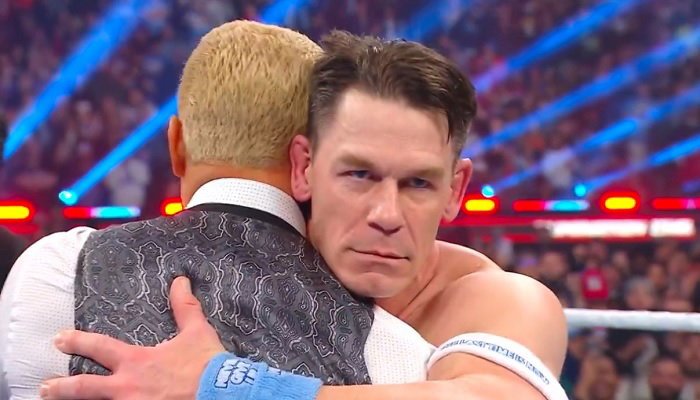
At Elimination Chamber on March 1, 2025, Cena shocked audiences by turning against Cody Rhodes and aligning with The Rock.
Guinness World Records later recognized Cena’s run as the longest WWE face run before turning heel: 22 years and 247 days, describing the prior heroic period as one in which he had embodied Hustle, Loyalty, Respect.
WWE commentary immediately understood what had changed.
One WWE analysis summarized the heel turn by contrasting Cena’s familiar values with:
“Sellout, Disloyalty and Disrespect.”
Then R-Truth—whose character had spent years idolizing Cena—made the conflict even more explicit.
Before facing Cena in May 2025, Truth declared that he wanted to beat Hustle, Loyalty and Respect back into John Cena.
Think about what that tells you.
WWE did not need to explain that Cena had changed by replacing his finisher.
The betrayal of those three values was enough to communicate a different version of the man.
And when Cena eventually wrestled his final match against Gunther in December 2025, WWE’s own recap returned to the original language, describing Cena as doing what he did best: embodying Hustle, Loyalty and Respect.
That gives the phrase an unusual full-circle quality.
It began as a code associated with Cena’s evolution.
It became merchandise.
It became part of how fans understood him.
Breaking it helped signal that the character had changed.
And by the final match, WWE used those same three words to summarize what the larger career represented.
Few wrestling slogans get that much narrative weight.
Hustle, Loyalty, Respect Is Useful Because It Makes You Answer Three Different Questions
You do not need to copy John Cena’s career for the phrase to work.
You can reduce it to three questions:
Hustle: Am I actually doing the work required by the thing I say I want?
Loyalty: Am I remembering the people, commitments and principles that have earned my support?
Respect: Am I pursuing the result without becoming someone I would dislike once I get it?
Some days, hustle will be the problem.
You know what you want but are avoiding the work.
Other days, loyalty will be harder.
A newer opportunity may tempt you to forget the people who helped you reach it.
And sometimes respect will be the test.
Competition, rejection or criticism can make disrespect feel temporarily satisfying.
That is why the three-word version is stronger than simply telling yourself to work harder.
Success is not only about whether you move forward. It is also about what you stay loyal to and how you behave while moving.
You may still fail.
You may change goals.
You may leave a team, relationship or job that no longer deserves loyalty.
You may need to defend yourself rather than quietly tolerate somebody else’s behavior.
None of those automatically violate the code.
A useful code should improve judgment, not replace it.
How to Wear John Cena’s Hustle, Loyalty, Respect Style
If Hustle, Loyalty, Respect is the part of John Cena you connect with most, you are choosing something broader than one match, one championship or one era.
That changes which Cena graphic makes sense.
A Word Life design is stronger when you want the rapper-era character.
A spinner-belt shirt makes more sense when Cena becoming world champion is the memory you want to carry.
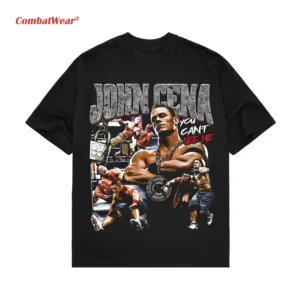
A You Can’t See Me graphic puts the taunt and swagger first.
But an HLR-centered design has a different job:
keep the code visible.
CombatWear’s current
WWE John Cena Shirt
is the broad Hustle, Loyalty, Respect option in the collection.
The supplied product snapshot lists it at $15.78, with black, white, sand and military green options and sizes S through 5XL.
The lower price can strengthen the decision.
It should not make the decision for you.
Choose this direction when you want your Cena shirt to represent how you want to operate, not simply what happened in a particular WWE storyline.
Choose a Thuganomics or Word Life design instead if the early character is what made you a fan.
Choose the spinner belt if championship Cena is your chapter.
Choose a 2025 design if you want wearable memorabilia from the final active year.
And choose an HLR design when the three words themselves are the thing worth keeping.
A shirt cannot make you hustle.
It cannot decide what deserves your loyalty.
It cannot make somebody respect you.
It can only make the standard visible.
The part that gives the words weight still has to come from what you do after you put it on.